Tuesday, April 28, 2026

Motion transmission & motion transformation systems(2025-2026)

Vocabulary:  transmission, transformation, chain and sprocket, gear trains, rod & crank, etc.

When we apply forces to things - be they objects or simple machines, we often see motion.

That resulting motion can be the same as the motion you applied or different from what you applied.

If the "input motion" is the SAME as the "output motion", it is called "Motion Transmission".

If the input and output motions are DIFFERENT, it is called "Motion Transformation".


There are systems that either keep the same motion OR change it.  

You will have to recognize what is happening, but not necessarily name the system.


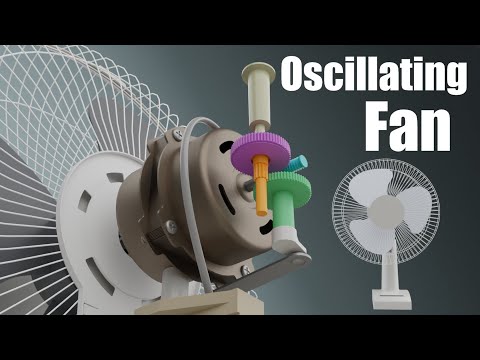
This video may not use the EXACT systems we talked about in the powerpoint, but it DOES show how types of motion change and is simply pretty cool!



Monday, April 20, 2026

Simple Machines(2025-2026)

Vocabulary:  Lever, pulley, wheel & axle, inclined plane, wedge, screw.

(Simple)Machines allow us to do things we couldn't do with our bare hands.

They give us a "mechanical advantage" -  this means allowing us to use less force when doing a job or work. 


Monday, April 13, 2026

Energy Transformations(2025-2026)

Vocabulary:  Energy, transformations, efficiency

Energy is the ability to cause change:  change the movement of an object or change its shape.

Energy is naturally found here on Earth, and we humans are constantly searching for Energy in all its forms, trying to harness it, control it, change it to what we need and manage it.  


Watch this video to check your understanding of Energy transformations:


The Law of Conservation of Energy explains how the total amount of energy going into a change MUST EQUAL the total energy coming out of a change.


Monday, March 30, 2026

Polar Auroras(2025-2026)

Vocabulary:  Solar wind, magnetosphere. 

To learn about Polar Auroras, we start at the Sun.

The Sun sends out a constant stream of energy and particles in all directions.  All planets and moons in our Solar system get struck by this barrage.  We call this steam of Energy from the Sun the "Solar Wind".

Our planet has a "Force field" of sorts, made up of lines of Magnetic force, made by the Inner core of the Earth.  We call it the Magnetosphere. 

The Solar wind is deflected away from the Earth's surface by the Magnetosphere.

However, some of the particles of Solar wind become trapped in the Magnetosphere at the poles.

There, they strike particles in the atmosphere and put on a spectacular light show.


Tuesday, March 24, 2026

Meteorites, Meteors, Asteroids & Comets(2025-2026)

 Vocabulary:  Meteorites, meteors, asteroids, comets


The objects above are listed in that particular order because that is the order in which they are found in terms of their distance from the Earth.

_________

Meteorites are closest - rocky bodies that crash into the Earth.

Meteors are next closest - in Earth's atmosphere.  They too, are rocky.

Asteroids are the last rocky bodies in the "warm" zone around the Sun. They are found in the Asteroid belt between mars and Jupter.

Comets are farthest away, past Neptune.  Because of this distance they are made of ice and some rocks(dirt).

__________


Thursday, March 12, 2026

The Outer Planets(2025-2026)

Vocabulary:  Jovian

The outer planets are called the "Jovian" planets because they are all large, like Jupiter - the largest planet in our solar system.

"Gas giants" is another common name.  It comes from what they are made of.


Gravity & the Inner Planets(2025-2026)

 Vocabulary:  Terrestrial, tectonics

We begin this lesson with a brief talk on Gravity and the rules that determine how strong we feel its pull.  

Gravity is what holds our Solar System together.

__________

The first four planets of our solar system are made of rocks.  

We therefore call them "rocky" or "terrestrial" planets.  These rocky surfaces may experience tectonic action and other phenomena related to weather and climate on its surface.

They are located in the inner solar system( see last class ppt )and are characterized by a rocky surface, slow rotation, fast revolution, few to no moons and no rings.

Students need to be able to identify each planet given a few clues.


This first video give a great overview of our Solar System and its planets.


This second video gives more details about the Inner / Rocky / Terrestrial planets.


Motion transmission & motion transformation systems(2025-2026)

Vocabulary:  transmission, transformation, chain and sprocket, gear trains, rod & crank, etc. When we apply forces to things - be they o...